

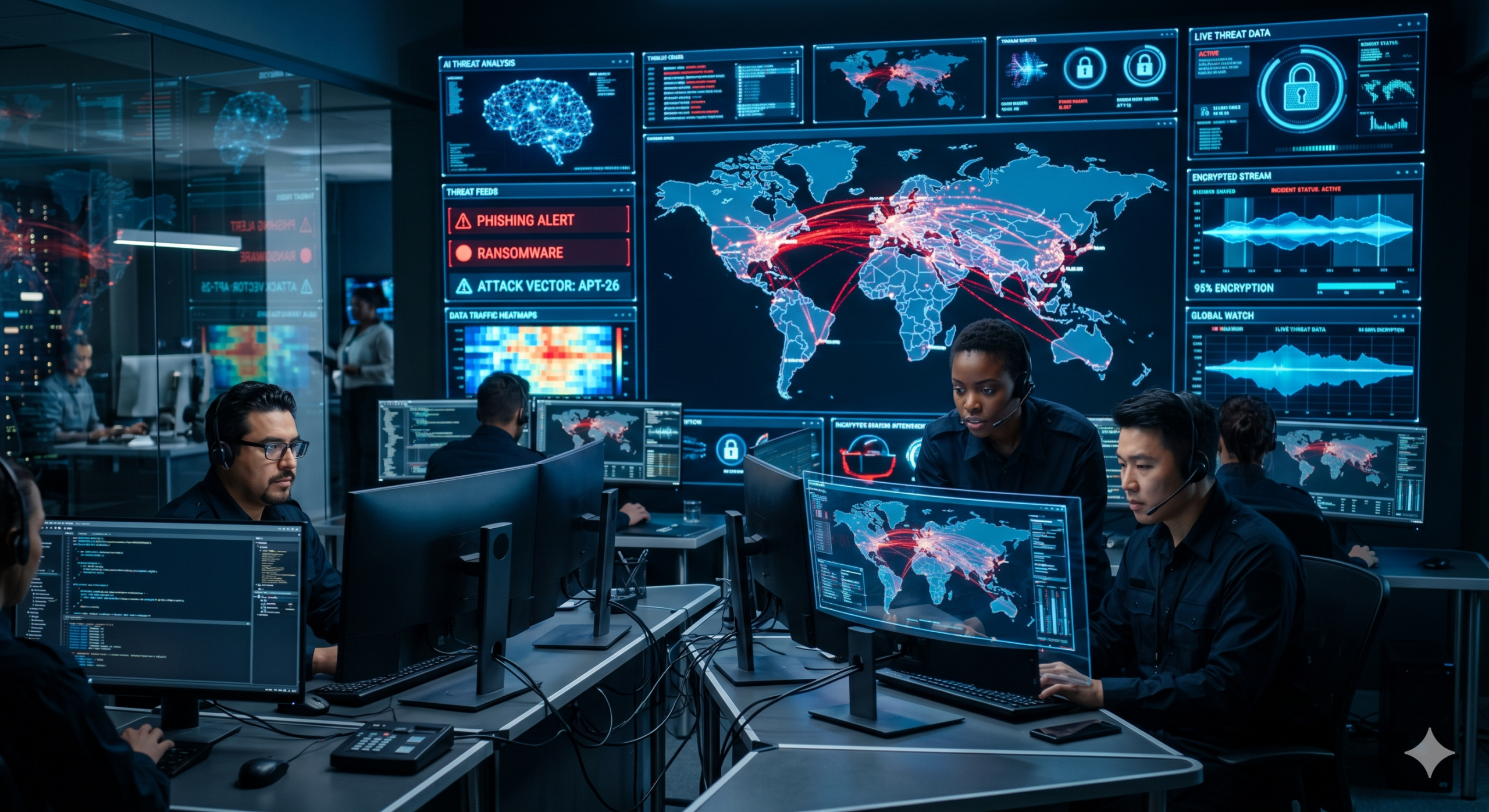
Cybersecurity in 2026 is no longer just a technical concern—it is a business-critical priority. Understanding the Common Cyber Threats in 2026 is essential for organizations aiming to protect their data, systems, and operations in an increasingly digital world. As digital transformation accelerates across industries, threat actors are evolving just as quickly, leveraging advanced technologies like artificial intelligence, automation, and deepfake systems to exploit vulnerabilities at scale.
Organizations today face a complex threat landscape that goes far beyond traditional malware and phishing attacks. From AI-powered cyberattacks to supply chain compromises and identity-based breaches, modern threats are more sophisticated, targeted, and harder to detect.
This guide explores the most common cyber threats in 2026, how they work, and what organizations can do to defend against them effectively.
1. AI-Powered Cyberattacks
Artificial intelligence has transformed cybersecurity—but not just for defenders. Attackers are now using AI to automate and enhance their attacks.
How it works:
- AI tools analyze massive datasets to identify vulnerabilities faster
- Machine learning models generate highly personalized phishing messages
- Automated bots conduct credential stuffing and brute-force attacks at scale
Why it’s dangerous:
AI-powered attacks are:
- Faster than human response times
- Highly targeted and convincing
- Continuously adapting to defenses
Example:
Attackers can scrape social media profiles and company websites to craft realistic spear-phishing emails that mimic internal communication styles.
Mitigation strategies:
- Implement AI-driven threat detection systems
- Use behavior-based anomaly detection
- Continuously train employees on emerging phishing tactics
2. Advanced Phishing and Deepfake Attacks
Phishing remains one of the most effective attack vectors, but in 2026, it has evolved significantly with deepfake technology.
Types of modern phishing:
- Spear phishing: Highly targeted emails
- Whaling: Attacks targeting executives
- Smishing and vishing: SMS and voice phishing
Deepfake threats:
Attackers now use AI-generated:
- Voice clones to impersonate executives
- Video deepfakes for social engineering
- Real-time video manipulation during calls
Real-world impact:
Employees may receive a call that sounds exactly like their CEO requesting urgent financial transfers.
Mitigation strategies:
- Implement multi-factor authentication (MFA)
- Use verification protocols for financial transactions
- Deploy email filtering and anti-phishing solutions
3. Ransomware 2.0 (Double and Triple Extortion)
Ransomware continues to dominate the threat landscape, but attackers have refined their methods.
Evolution of ransomware:
- Double extortion: Encrypt data + threaten data leaks
- Triple extortion: Add pressure via DDoS or targeting customers
Key characteristics:
- Targets critical infrastructure and enterprises
- Uses lateral movement within networks
- Exploits unpatched vulnerabilities
Why it’s effective:
Organizations face both operational disruption and reputational damage, increasing the likelihood of paying ransom.
Mitigation strategies:
- Regular offline backups
- Zero Trust architecture
- Endpoint detection and response (EDR) systems
4. Supply Chain Attacks
Supply chain attacks have become one of the most dangerous cybersecurity threats in 2026, with recent research highlighting the growing scale and sophistication of these breaches across global ecosystems. According to IBM’s latest cyber threat trends in 2026, attackers are increasingly targeting trusted vendors and software providers to infiltrate multiple organizations at once.
What is it:
Attackers infiltrate trusted vendors, software providers, or service partners to gain access to larger targets.
Attack methods:
- Compromised software updates
- Malicious code injection into third-party tools
- Exploiting vendor access credentials
Why it’s critical:
- Trust relationships are exploited
- Attacks scale across multiple organizations
- Detection is often delayed
Mitigation strategies:
- Conduct vendor risk assessments
- Monitor third-party integrations
- Use software bill of materials (SBOM) tracking
5. Identity-Based Attacks
In 2026, identity is the new perimeter. Attackers focus less on breaking systems and more on compromising user credentials.
Common techniques:
- Credential stuffing
- Password spraying
- Session hijacking
- Token theft
Why identity attacks are rising:
- Remote work environments increase exposure
- Weak password practices persist
- Over-reliance on single-factor authentication
Mitigation strategies:
- Enforce strong MFA policies
- Adopt passwordless authentication
- Monitor login behavior and anomalies
6. Cloud Security Threats
As organizations shift to cloud infrastructure, misconfigurations and vulnerabilities create new attack surfaces.
Common cloud threats:
- Misconfigured storage buckets
- Insecure APIs
- Unauthorized access due to weak IAM policies
Risks involved:
- Data exposure
- Account takeover
- Service disruption
Mitigation strategies:
- Implement cloud security posture management (CSPM)
- Use least privilege access controls
- Continuously audit configurations
7. Internet of Things (IoT) Vulnerabilities
The rapid growth of IoT devices has significantly expanded the attack surface.
Examples of vulnerable devices:
- Smart home systems
- Industrial sensors
- Medical devices
- Connected vehicles
Common issues:
- Weak default passwords
- Lack of firmware updates
- Insecure communication protocols
Potential impact:
- Botnet attacks
- Data breaches
- Operational disruption
Mitigation strategies:
- Segment IoT networks
- Regularly update firmware
- Disable unnecessary device features
8. Zero-Day Exploits
Zero-day vulnerabilities are flaws unknown to software vendors, making them highly valuable to attackers.
Characteristics:
- No existing patches
- Difficult to detect
- Often used in targeted attacks
Why they matter:
Organizations have no immediate defense, giving attackers a significant advantage.
Mitigation strategies:
- Use advanced threat detection tools
- Apply virtual patching techniques
- Maintain rapid patch management processes
9. Insider Threats
Not all cyber threats come from external actors. Insider threats remain a major concern in 2026.
Types of insiders:
- Malicious employees
- Negligent users
- Compromised accounts
Risks include:
- Data leaks
- Intellectual property theft
- System sabotage
Mitigation strategies:
- Implement strict access controls
- Monitor user activity
- Conduct employee security training
10. Distributed Denial-of-Service (DDoS) Attacks
DDoS attacks continue to evolve with greater scale and sophistication.
How they work:
- Flood systems with traffic
- Overwhelm servers and networks
- Disrupt services
Modern trends:
- AI-optimized attack patterns
- IoT-based botnets
- Multi-vector attacks
Mitigation strategies:
- Use DDoS protection services
- Implement traffic filtering
- Deploy scalable cloud infrastructure
11. API Attacks
APIs are essential for modern applications, but they are also a growing target for attackers.
Common API threats:
- Broken authentication
- Data exposure
- Injection attacks
Why APIs are vulnerable:
- Rapid development cycles
- Poor security testing
- Lack of monitoring
Mitigation strategies:
- Implement API gateways
- Use authentication tokens (OAuth)
- Conduct regular security testing
12. Quantum Computing Threats (Emerging Risk)
While still developing, quantum computing poses a future risk to encryption.
Potential impact:
- Breaking traditional encryption algorithms
- Compromising secure communications
Current reality:
- Not yet widespread, but preparation is critical
Mitigation strategies:
- Explore quantum-resistant encryption
- Stay updated on cryptographic standards
Best Practices to Stay Secure in 2026
To effectively combat modern cyber threats, organizations should adopt a proactive and layered security approach.
Key strategies:
1. Zero Trust Architecture
- Never trust, always verify
- Continuously authenticate users and devices
2. Continuous Monitoring
- Use SIEM and AI-driven analytics
- Detect anomalies in real time
3. Employee Awareness Training
- Regular phishing simulations
- Security best practices education
4. Regular Updates and Patch Management
- Keep systems up to date
- Address vulnerabilities quickly
5. Incident Response Planning
- Prepare for breaches
- Minimize damage and recovery time
Conclusion
The cybersecurity landscape in 2026 is defined by complexity, speed, and innovation—on both sides of the battlefield. Cyber threats are no longer isolated incidents but part of coordinated, intelligent campaigns designed to exploit weaknesses across people, processes, and technology.
Organizations that rely solely on traditional defenses will struggle to keep up. Instead, success depends on adopting advanced security strategies, leveraging AI responsibly, and building a culture of cybersecurity awareness.
By understanding the most common cyber threats in 2026 and implementing robust defense mechanisms, businesses can not only protect their assets but also build trust, resilience, and long-term sustainability in an increasingly digital world.