
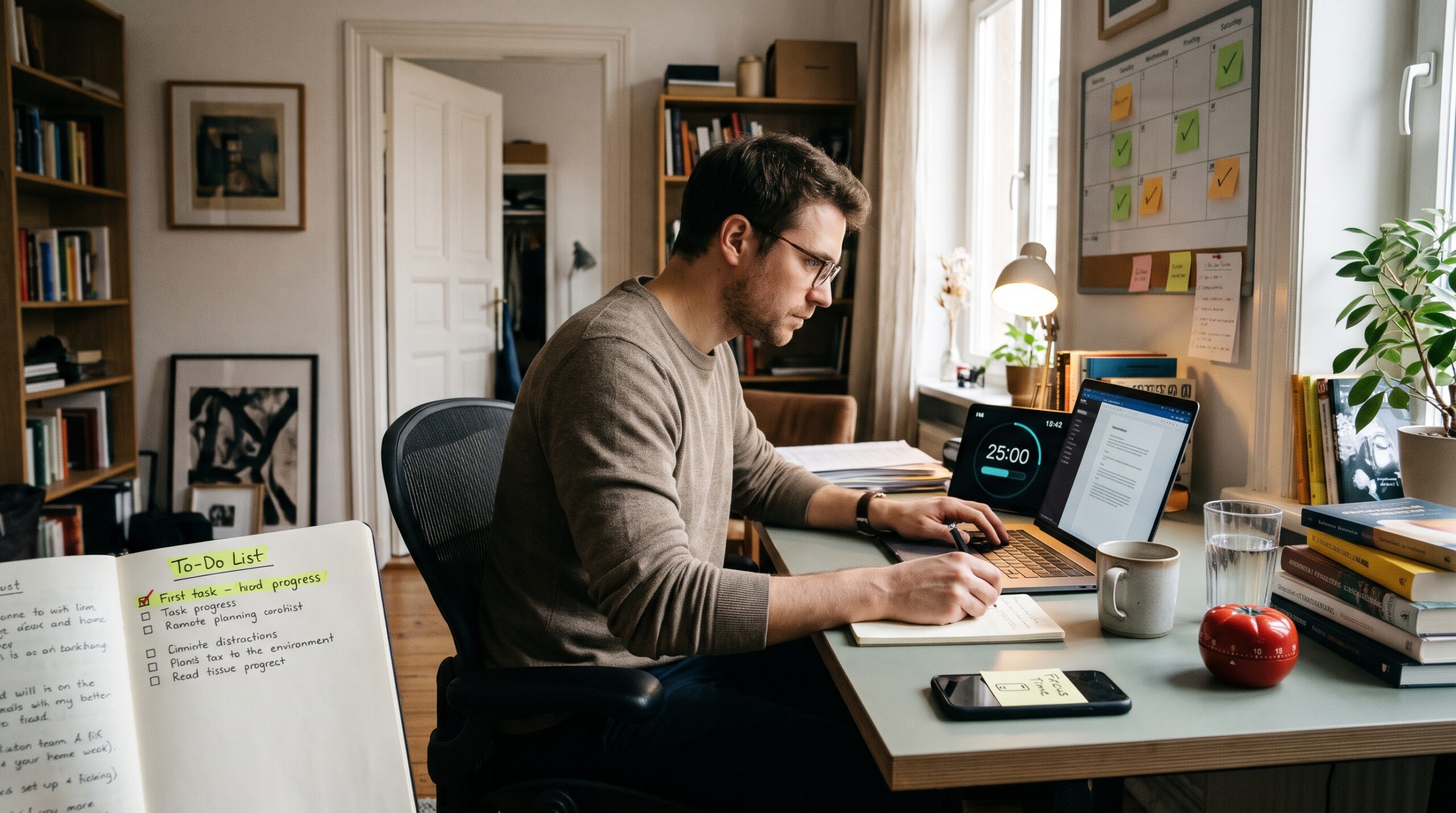
Nearly everyone who comes to my office asking how to stop procrastinating starts by apologizing. They say they are lazy, or undisciplined, or that they work best under pressure. Then they describe their week. One person reorganized a whole closet so she wouldn’t have to open a spreadsheet. Another answered forty emails that could have waited and never touched the one report his manager actually needed.
None of this is laziness. Lazy people don’t put real effort into avoiding things. People who procrastinate do, and they usually feel terrible while they’re doing it.
I have practiced cognitive behavioral therapy for a long time, and procrastination is one of the most common things my clients bring in, even when it isn’t the reason they first booked. It shows up next to anxiety, perfectionism, low mood, burnout, and the plain overload of adult life. Over the years I have seen which strategies hold up in a real week and which only sound good in a productivity video.
If you want to know how to stop procrastinating, the first step isn’t a new app or a stricter schedule. It’s understanding what is going on in the moment you decide, again, that you’ll do it later. The ten tricks below come from that understanding. Each one rests on research, and I have used each one with clients and with myself. When people ask me for practical advice on beating delay, these are the answers I actually give them.
How to Stop Procrastinating Starts With Knowing Why You Do It
The research on this has shifted a lot in the past twenty years. Psychologists Fuschia Sirois and Timothy Pychyl describe procrastination as putting short-term mood repair ahead of long-term goals. A task makes you uncomfortable, maybe through boredom, self-doubt, confusion, or fear of being judged. Putting it off brings quick relief. Your brain notices the relief and learns to repeat the move.
Their work also shows that the bill goes to your future self. The person who avoids the tax forms on Tuesday isn’t the one who pays the late fee in April. That gap between present you and future you is a big part of why delay feels so reasonable at the moment you choose it.
Sirois has said in an APA interview that we aren’t avoiding the task as much as the feelings tied to it. That idea changes how I work with clients. If the problem is emotional, a better calendar alone won’t teach you how to stop procrastinating.
The broadest study of the topic points the same way. Piers Steel’s meta-analysis in Psychological Bulletin pulled together 691 correlations. The strongest predictors were how unpleasant the task feels, low confidence in your ability to do it, impulsiveness, and lower conscientiousness. Interestingly, coverage of that review noted that perfectionism, which self-help books often blame first, was not the main driver.
How to Stop Procrastinating With Cognitive Behavioral Therapy
So when a client tells me “I just need more willpower,” I gently disagree. You need better ways to handle the discomfort, better beliefs about yourself and the task, and an environment that makes starting easier than avoiding. That is what CBT is built for, and there is evidence it helps. In a randomized trial run by Alexander Rozental and colleagues in Sweden, 150 adults with procrastination problems received internet-delivered CBT, with or without therapist contact, and both groups improved compared with a waitlist.
In other words, learning how to stop procrastinating is a skill, not a personality trait. Here is how to put the same principles to work on your own.
1. Name the Feeling Before You Name the Task
When you notice yourself drifting away from something, pause and ask a simple question: what am I feeling right now?
Not what you’re thinking, what you’re feeling. Bored. Anxious. Resentful. Overwhelmed. Embarrassed that you’re behind. Most people never ask this, so the feeling runs the show from offstage.
I worked with a graduate student, whom I’ll call Priya (her details are changed), who said she “couldn’t focus” on her thesis. When we slowed it down, the feeling that came up every time she opened the document was shame. Her advisor had criticized a draft months before, and every page now felt like proof she didn’t belong in the program. Her problem wasn’t focus. It was shame, and her mind was doing its best to avoid it.
Naming the emotion does two things. It puts a little distance between you and the feeling, and it tells you what you’re dealing with. You can’t fix “I’m not motivated.” You can work with “I’m scared this will be bad.”
Try writing it down in one line: “I’m avoiding the budget because I feel stupid around numbers.” That sentence is often enough to loosen the grip.
2. Catch the Thought, Then Put It on Trial
Behind almost every bout of procrastination sits a thought you haven’t examined. In CBT we call these automatic thoughts, because they arrive fast and feel like facts.
Common ones I hear:
- “I need to be in the right mood to do this.”
- “If I can’t do it perfectly, there’s no point starting.”
- “I work better under pressure.”
- “I’ll have more energy tomorrow.”
Pick the one that sounds most like you and question it the way a fair judge would. What is the evidence for it? What is the evidence against it? Have you ever started something without being in the mood and ended up fine?
Take “I’ll have more energy tomorrow.” Look back at last week. Did tomorrow you actually have more energy? For most of my clients the honest answer is no. Tomorrow you is the same person with less time.
Then write a more balanced thought. Not a cheerful one, a believable one. “I don’t feel like doing this, and I can still do twenty minutes of it” beats “I love spreadsheets!” every time, because your brain will actually accept it.
3. Shrink the First Step Until It Feels Almost Silly
Steel’s research found that how aversive a task feels is one of the strongest predictors of delay. You can’t always make a task enjoyable, but you can make the first step so small that there is little left to dread.
“Write the report” is a cliff. “Open the file and type the title” is a curb.
In behavioral activation, one of the core CBT techniques, we break avoided activities into steps small enough that starting takes almost no courage. A client avoiding a job search might start with “find one posting and save the link.” That’s it. Not apply, not update the resume, just save one link.
People sometimes feel embarrassed by how small these steps are. I tell them the size isn’t the point. The point is breaking the loop where avoidance brings relief and relief feeds more avoidance. Each small start gives your brain a new lesson: I approached this and nothing terrible happened.
Momentum usually does the rest. Once the file is open and the title is typed, the next sentence is far easier than the first one ever was.
4. Make an If-Then Plan Instead of a Promise
“I’ll work on it this week” is a wish. It has no time, no place, and no trigger, which leaves room for your mood to decide.
Psychologists Peter Gollwitzer and Paschal Sheeran studied a better format called implementation intentions. These are plans built as “if situation X happens, then I will do Y.” Across 94 independent tests, their meta-analysis found that this kind of planning had a medium-to-large effect on reaching goals.
Some examples I’ve written with clients:
- “If I sit down at my desk after lunch, then I will open the grant draft before I check email.”
- “When I notice myself reaching for my phone while studying, I will put it in the other room and set a timer for fifteen minutes.”
- “Every Sunday at 7 p.m., I will look at next week’s deadlines for five minutes.”
The second example is worth noticing. These plans are not only for starting. They’re also good for the moment you know you’ll get pulled off track. You decide in advance, while you’re calm, so you don’t have to decide in the moment, while you’re tempted. Tying one plan to your morning routine is an easy place to begin, because the trigger already happens every day.
If you’re serious about how to stop procrastinating, write three of these for your hardest task this week. Keep them specific enough that you would know for certain whether you followed them.
5. Agree to Ten Minutes and Let the Wave Pass
Discomfort around an avoided task behaves like a wave. It peaks right before you start and in the first few minutes after. Then, for most people, it eases off.
The trouble is that procrastination always leaves at the peak. You feel the surge, you switch tabs, and you never find out that the wave would have dropped.
So I ask clients to make a deal with themselves: ten minutes, timer on, and then you’re allowed to stop with no guilt. The permission to stop matters. It turns the task from a mountain into a short visit.
This draws on a principle used across CBT for anxiety: we approach the uncomfortable thing and stay long enough for the discomfort to settle, rather than escaping at its highest point. Every time you stay, you teach yourself that the feeling is survivable.
Most people keep going after the timer rings. Some don’t, and that’s fine. Ten honest minutes is still ten minutes more than yesterday, and you’ve broken the habit of leaving at the peak.
6. Change Your Surroundings, Not Your Personality
Steel’s review lists impulsiveness and distractibility among the strongest predictors of procrastination. You can spend years trying to become a less impulsive person. Or you can make the distractions harder to reach this afternoon.
In CBT this is called stimulus control. The idea is simple: your environment cues your behavior, so arrange it to cue the behavior you want. Learning how to stop procrastinating is often less about you and more about your desk.
A few changes that have worked for people I’ve seen:
- Keep your phone in a different room during focus blocks, not face down on the desk.
- Log out of the sites you drift to, so getting back in takes a password.
- Use one spot only for the avoided task, even if it’s just one end of the kitchen table.
- Close every browser tab that isn’t part of the work before you begin.
If you work from home, these remote work tips apply the same thinking to your whole setup.
One client, a writer, bought a cheap laptop with no browser installed and used it only for drafts. She called it her “boring computer.” Her output nearly doubled within a month, and she didn’t become a different person to get there. She changed what was within arm’s reach.
7. Pair the Task You Avoid With Something You Enjoy
Katherine Milkman at the Wharton School tested an idea she calls temptation bundling. You link something you crave with something you keep putting off, and you only get the treat while doing the chore.
In her study of 226 gym members, people who could only listen to gripping audiobooks at the gym went 51 percent more often than the control group early on. The effect faded over time, especially after a holiday break, which is an honest reminder that no trick works forever on its own. Still, most participants later said they would pay for a setup that kept the audiobooks locked to the gym.
You can build your own version:
- Your favorite coffee only while doing your expense reports.
- That podcast you love only while cleaning the apartment.
- A good playlist only during the first hour of the task you dread.
This works because it attacks the core of procrastination. The avoided task feels bad right now and pays off later. Bundling adds something good right now, which narrows the gap your brain is reacting to.
8. Forgive Yesterday’s Delay So It Doesn’t Become Tomorrow’s
This one surprises people, and in my view it’s the most overlooked part of how to stop procrastinating.
Most procrastinators believe that being hard on themselves keeps them in line. In my experience, the opposite is true. Harsh self-talk adds shame to an already unpleasant task, and shame is one of the strongest pulls toward avoidance there is.
Researchers Michael Wohl, Timothy Pychyl, and Shannon Bennett followed first-year university students across two sets of midterm exams. Among students who had procrastinated heavily before the first exam, those who forgave themselves for it felt less negative afterward and procrastinated less before the second exam. The study was observational, so it doesn’t prove cause and effect, but the pattern fits what I see in therapy again and again.
Forgiving yourself isn’t pretending the delay didn’t matter. It’s saying, “Yes, I put that off, and it cost me. I’m a human being who sometimes avoids hard things. Here’s what I’ll do next.” Then you do the next thing.
When a client slips, I ask them to speak to themselves the way they would speak to a friend in the same spot. Nobody tells a friend, “You’re pathetic, you always do this.” They say, “That was rough. What do you need to get started?” Try saying that to yourself, even if it feels awkward at first.
9. Introduce Yourself to Your Future Self
Sirois and Pychyl’s work makes a point I find powerful: the cost of procrastination lands on a future version of you who feels like a stranger. Present you gets the relief. Future you gets the stress, the rushed work, and sometimes the health effects of chronic strain.
So make future you more real.
Some ways I’ve seen this work:
- Write a short note from yourself one week from now, describing how it feels to have the task done. Or how it feels if it isn’t.
- Before you put something off, picture the specific moment it will come due. Where will you be? What time will it be? How tired will you feel?
- Put the consequence on your calendar, not just the deadline. “Friday 5 p.m.: report due, and I’m at my sister’s dinner that night.”
A client who ran a small business kept delaying his quarterly bookkeeping. We wrote down exactly what the last week of the quarter had felt like the time before: three late nights, snapping at his kids, a missed payment. Reading that page took four minutes. It moved him more than any planner ever had, because it put a real person on the other end of his choice.
10. Track What Happens and Treat It as an Experiment
The last trick ties the others together. Treat your procrastination as data, not as proof that something is wrong with you.
For two weeks, keep a short log. When you notice yourself avoiding something, jot down four things: the task, the feeling, the thought, and what you did instead. At the end of each day, add one line about what worked.
Patterns show up quickly. Perhaps you avoid anything involving phone calls. The 3 p.m. slump might be when everything falls apart. Or tasks from one particular person always feel heavier. Once you can see the pattern, you can plan around it, and your own notes start showing you how to stop procrastinating in the situations that trip you up most.
In CBT we call this approach a behavioral experiment. You test a prediction (“If I start the presentation now, I’ll just stare at a blank slide”) against what actually happens. Over time, the evidence you collect starts to outweigh the stories anxiety tells you.
The log also gives you something to celebrate. Most people only notice their failures. Writing down “started the proposal for ten minutes, kept going for forty” gives your brain a different record of who you are.
When Learning How to Stop Procrastinating Isn’t Enough
Everyone procrastinates sometimes. For some people, though, the pattern is persistent and painful, and it touches work, health, money, and relationships.
If you have tried strategies like these and nothing sticks, or if the avoidance comes with low mood, constant worry, trouble sleeping, or a long history of difficulty with focus, it is worth talking with a mental health professional. Ongoing procrastination can sit on top of depression, anxiety, or attention difficulties such as ADHD, and those deserve proper assessment and care. There’s no shame in that. A good therapist won’t lecture you about time management. They’ll help you understand what the avoidance is protecting you from and build better ways to handle it.
How to Stop Procrastinating Starting Today
If you remember one thing about how to stop procrastinating, let it be this: procrastination is your mind trying to make you feel better right now. It isn’t a moral failure. It’s a coping strategy that worked in the short run and stopped working in the long run.
You don’t need to use all ten tricks this week. Pick one. If you’re not sure which, start with the ten-minute agreement or the if-then plan, because they’re easy to test. Do it once today. Notice what happens. Then be kind to yourself about the result, whatever it is.
That’s how change usually happens in my office. Not with a big burst of willpower, but with small, honest steps taken by someone who has stopped calling themselves lazy.
Frequently Asked Questions About How to Stop Procrastinating
What is the main cause of procrastination?
Research points mostly to emotion, not time management. Work by Sirois and Pychyl describes procrastination as choosing short-term mood repair over long-term goals. Steel’s meta-analysis adds that unpleasant tasks, low confidence, and impulsiveness are among the strongest predictors.
Is procrastination the same as laziness?
No. Laziness is an unwillingness to put in effort. Procrastinators often work hard on the wrong things to avoid an uncomfortable one. The New York Times piece on why we procrastinate covers this distinction well.
Can cognitive behavioral therapy teach me how to stop procrastinating?
Yes. A randomized trial of internet-based CBT for procrastination found improvements in both guided and self-guided groups compared with a waitlist. The original study protocol describes the techniques used, including behavioral activation and stimulus control.
What is the best way to learn how to stop procrastinating when I feel overwhelmed?
Shrink the first step until it takes almost no effort, then commit to ten minutes. Writing an if-then plan for when and where you’ll start also takes the decision off your plate in the moment.
Does being hard on myself help me stop procrastinating?
Usually not. Students who forgave themselves for procrastinating before one exam tended to procrastinate less before the next one. Self-criticism adds shame, which makes the task feel even worse to approach.
What is temptation bundling and does it work?
It means pairing something you enjoy with a task you avoid, and only allowing the treat during that task. Katherine Milkman’s gym study at Wharton found it raised attendance, though the effect faded over time, so it works best combined with other strategies.
References
- Sirois, F., and Pychyl, T. (2013). Procrastination and the Priority of Short-Term Mood Regulation: Consequences for Future Self. Social and Personality Psychology Compass.
- Steel, P. (2007). The Nature of Procrastination: A Meta-Analytic and Theoretical Review of Quintessential Self-Regulatory Failure. Psychological Bulletin.
- ScienceDaily (2007). We Really Meant to Post It Sooner: Research Into Procrastination Shows Surprising Findings.
- American Psychological Association. Speaking of Psychology: Why We Procrastinate and What to Do About It, with Fuschia Sirois, PhD.
- British Psychological Society Research Digest (2010). The Cure for Procrastination? Forgive Yourself!
- Gollwitzer, P. M., and Sheeran, P. (2006). Implementation Intentions and Goal Achievement: A Meta-Analysis of Effects and Processes. Advances in Experimental Social Psychology.
- Rozental, A., and Carlbring, P. (2013). Internet-Based Cognitive Behavior Therapy for Procrastination: Study Protocol for a Randomized Controlled Trial. JMIR Research Protocols.
- Eckert, M., et al. (2018). Effectiveness of a Two-Week Online Training to Overcome Procrastination: A Randomized Controlled Trial. Frontiers in Psychology.
- Penn Today (2014). Guilty Pleasures and Obtaining Goals.
- Knowledge at Wharton. Using The Hunger Games to Encourage Healthier Choices.
- Lieberman, C. (2019). Why You Procrastinate (It Has Nothing to Do With Self-Control). The New York Times, via Association for Psychological Science.