

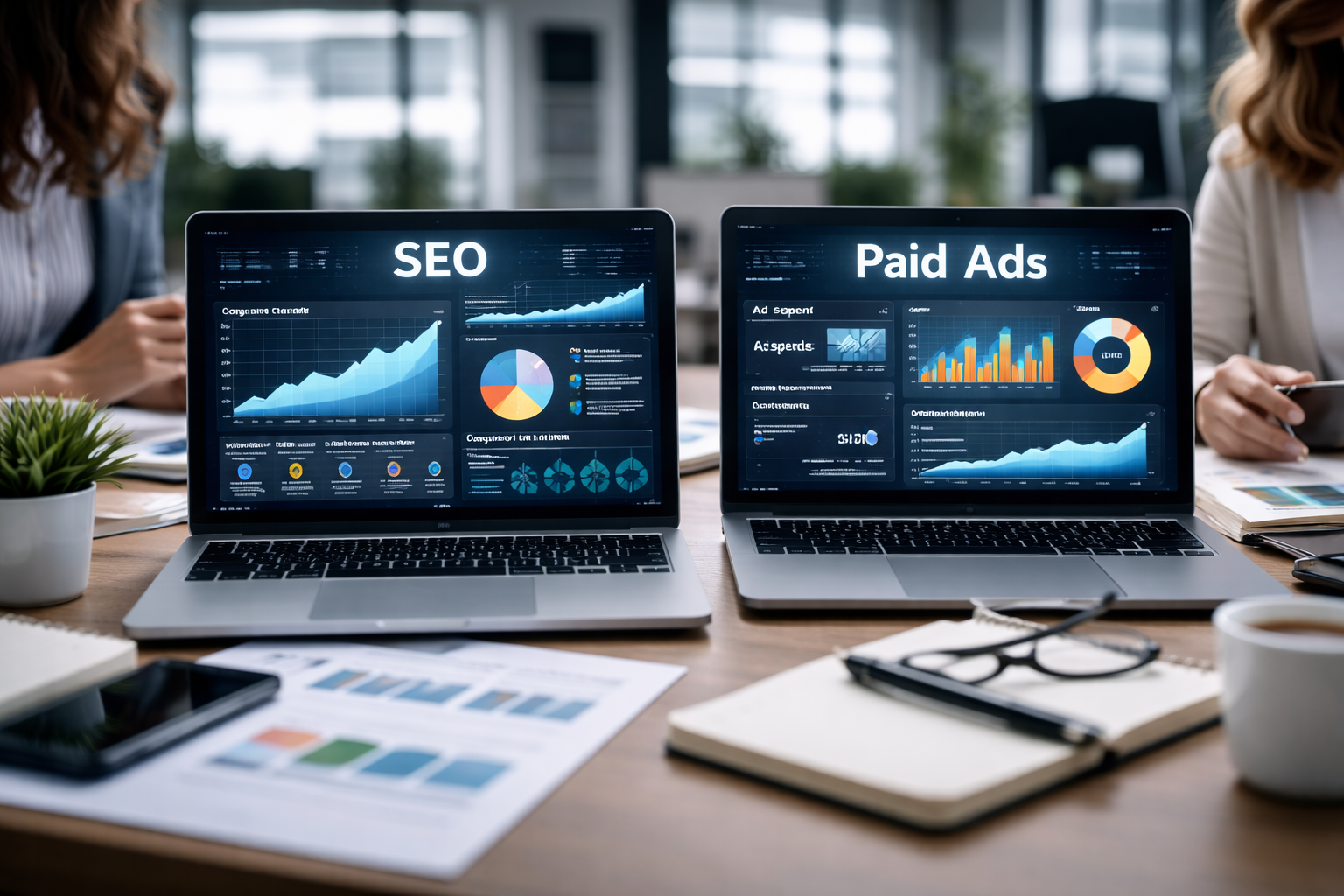
SEO vs ads is one of the most important decisions businesses face when building a digital marketing strategy. In 2026, both search engine optimization (SEO) and paid advertising (PPC) have evolved significantly, offering powerful ways to drive traffic, generate leads, and increase revenue. However, choosing the right approach depends on your goals, budget, and timeline.
In this guide, we’ll break down the differences, advantages, and use cases of each method to help you decide which strategy works best for your business.
What Is SEO?
Search engine optimization (SEO) is the process of improving a website’s visibility in organic (non-paid) search results. It focuses on optimizing content, technical performance, and authority to rank higher on search engines like Google.
Key Components of SEO
- Keyword research and optimization
- High-quality content creation
- Technical SEO (site speed, mobile optimization)
- Backlink building
- User experience improvements
SEO is a long-term strategy that builds sustainable traffic over time.
What Are Paid Ads?
Paid advertising, also known as pay-per-click (PPC), involves paying for visibility on search engines and other platforms. Businesses bid on keywords or target audiences to display ads instantly.
Common Platforms
- Google Ads
- Facebook Ads
- LinkedIn Ads
- YouTube Ads
Paid ads deliver immediate results and allow precise targeting.
SEO vs Ads: Key Differences
Understanding the differences between these two approaches is essential when choosing the right strategy. Insights from SEO vs PPC strategy highlight how SEO focuses on long-term growth, while paid ads deliver immediate visibility and faster results.
| Factor | SEO | Paid Ads |
|---|---|---|
| Cost | Free traffic (long-term investment) | Pay per click or impression |
| Speed | Slow to build results | Instant visibility |
| Sustainability | Long-lasting results | Stops when budget ends |
| Trust | Higher credibility | Lower trust (ads labeled) |
| Scalability | Requires time and effort | Easily scalable with budget |
Both approaches have unique strengths depending on your objectives.
Benefits of SEO in 2026
SEO continues to be a powerful strategy for long-term growth.
1. Sustainable Traffic
Once your content ranks, it can generate consistent traffic without ongoing costs.
2. Higher Trust and Credibility
Users often trust organic results more than ads.
3. Cost Efficiency
Although SEO requires investment in content and optimization, it delivers strong ROI over time.
4. Compounding Results
SEO builds momentum—the more you optimize, the better your results.
Benefits of Paid Ads in 2026
Paid advertising offers speed and control that SEO cannot match.
1. Instant Results
Ads can drive traffic immediately after launch.
2. Precise Targeting
You can target users based on demographics, behavior, and interests.
3. Measurable Performance
Detailed analytics allow you to track conversions and ROI.
4. Scalable Campaigns
Increase budget to scale results quickly.
When to Choose SEO
SEO is ideal for businesses focused on long-term growth.
Best Use Cases
- Building brand authority
- Generating consistent organic traffic
- Content-driven marketing strategies
- Limited advertising budget
SEO works best when you have time to invest in sustainable results.
When to Choose Paid Ads
Paid advertising is better for immediate impact and quick results.
Best Use Cases
- Launching new products
- Running time-sensitive campaigns
- Testing markets and offers
- Generating quick leads
Ads are ideal when speed and control are priorities.
SEO vs Ads: Cost Comparison
Cost is a major factor when choosing between these strategies.
SEO Costs
- Content creation
- SEO tools and software
- Link-building efforts
- Technical optimization
Paid Ads Costs
- Cost per click (CPC)
- Campaign management
- Creative development
- Ongoing budget allocation
While SEO has upfront costs, ads require continuous spending.
Combining SEO and Paid Ads
The most effective strategy in 2026 is not choosing one over the other—but combining both.
Why Use Both?
- SEO builds long-term traffic
- Ads provide immediate results
- Data from ads can improve SEO strategy
- SEO reduces dependency on paid campaigns
Example Strategy
- Use ads to test keywords and campaigns
- Use SEO to build long-term rankings
- Retarget users through paid campaigns
This hybrid approach maximizes results and minimizes risk.
Best Practices for SEO vs Ads
To get the most out of both strategies, follow these best practices:
1. Align with Business Goals
Choose strategies based on your objectives and timeline.
2. Track Performance
Use analytics tools to measure results and optimize campaigns.
3. Focus on User Experience
Ensure your website delivers value and usability.
4. Optimize Continuously
Both SEO and ads require ongoing improvement.
5. Balance Budget and Effort
Allocate resources strategically between both channels.
Challenges to Consider
Each strategy comes with its own challenges.
SEO Challenges
- Takes time to see results
- Requires consistent effort
- Algorithm updates can impact rankings
Paid Ads Challenges
- Ongoing costs
- Competition increases CPC
- Requires constant optimization
Understanding these challenges helps you plan effectively.
Future Trends in SEO and Paid Ads
In 2026, both SEO and paid advertising are evolving rapidly.
Key Trends
- AI-driven search optimization
- Voice and visual search
- Automated ad campaigns
- Personalized user experiences
- Data privacy regulations
Businesses that adapt to these trends will stay competitive.
Conclusion
The debate between SEO vs ads doesn’t have a one-size-fits-all answer. SEO is ideal for long-term growth and sustainability, while paid ads deliver immediate results and scalability.
For most businesses, the best approach is a combination of both—leveraging SEO for consistent traffic and paid ads for quick wins. By understanding your goals and resources, you can create a strategy that drives success in 2026 and beyond.