

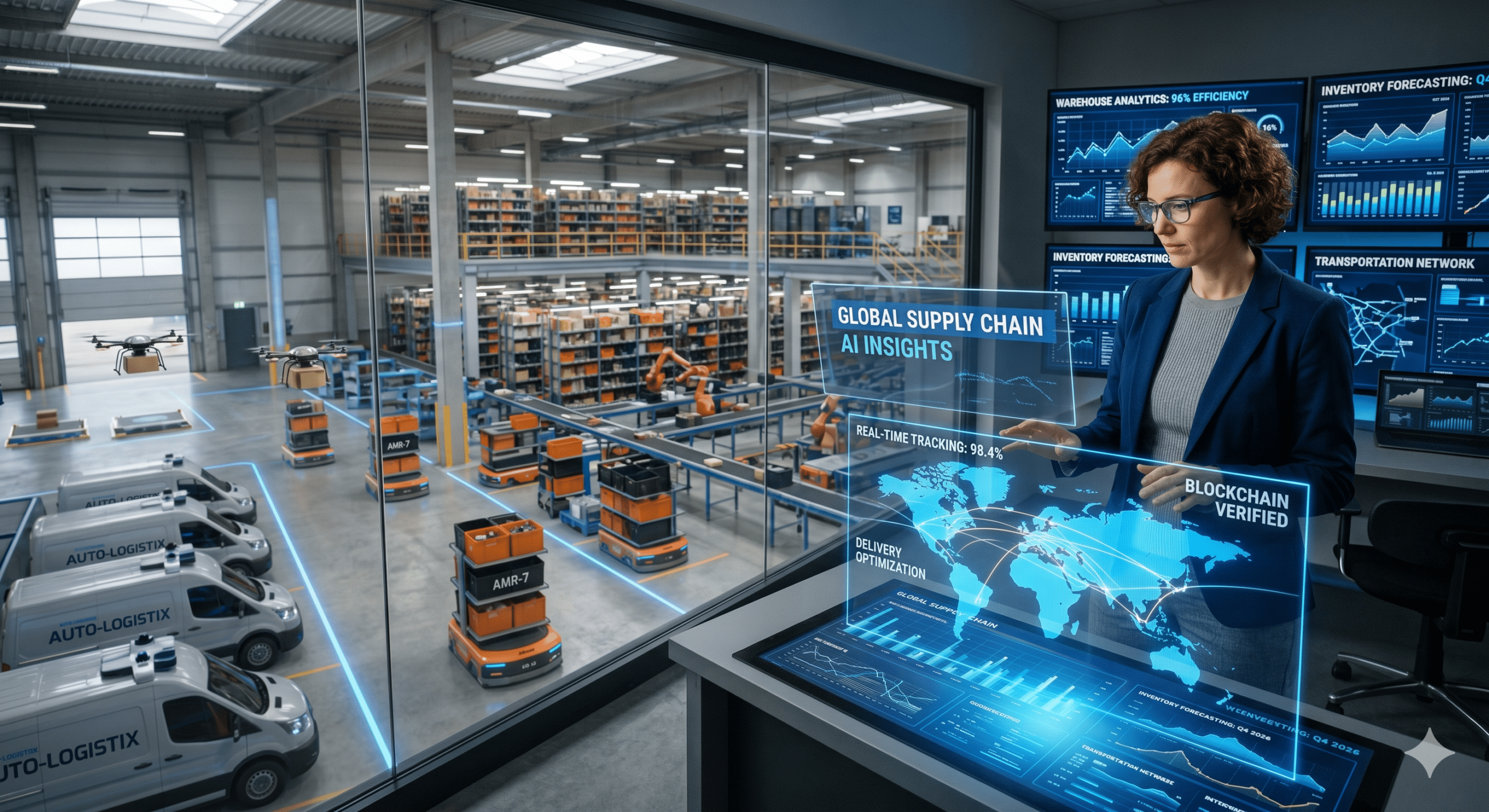
The global logistics industry is undergoing one of the most significant technological transformations in modern business history. As e-commerce expands, consumer expectations evolve, and international trade becomes more complex, businesses are investing heavily in advanced logistics and fulfillment technologies to improve efficiency, speed, and scalability. In 2026, logistics & fulfillment tech trends are redefining how products move through supply chains, warehouses, transportation networks, and last-mile delivery systems.
Modern consumers now expect same-day shipping, real-time tracking, accurate inventory updates, and seamless delivery experiences. Businesses that cannot meet these expectations risk losing customers to faster and more technologically advanced competitors.
To remain competitive, companies are adopting artificial intelligence, robotics, predictive analytics, autonomous transportation, blockchain systems, and cloud-based logistics platforms. These technologies are helping businesses streamline operations, reduce costs, improve accuracy, and create smarter supply chain ecosystems. Industry leaders monitoring the latest logistics & fulfillment tech trends are increasingly investing in AI-driven automation, warehouse intelligence, and real-time supply chain visibility to improve operational efficiency in 2026.
This article explores the most important logistics & fulfillment tech trends in 2026, the technologies driving supply chain innovation, and how businesses can prepare for the future of intelligent commerce and global distribution.
Why Logistics Technology Matters More Than Ever
Logistics is no longer just about moving products from one location to another. It has become a strategic advantage that directly impacts customer satisfaction, operational efficiency, and profitability.
Modern logistics technology helps businesses:
- Improve delivery speed
- Reduce shipping costs
- Increase warehouse efficiency
- Minimize inventory errors
- Enhance supply chain visibility
- Improve customer experiences
- Reduce operational risks
- Support global expansion
In today’s digital economy, fulfillment performance plays a major role in brand reputation and customer loyalty.
Artificial Intelligence Is Transforming Supply Chains
Artificial intelligence has become one of the most influential technologies in logistics and fulfillment operations.
AI systems now help businesses analyze massive amounts of supply chain data in real time.
Predictive Demand Forecasting
AI-powered forecasting tools predict:
- Consumer demand
- Seasonal buying trends
- Inventory requirements
- Shipping volumes
This helps businesses optimize inventory management and avoid stock shortages or overstocking problems.
Intelligent Route Optimization
AI-driven logistics systems calculate the most efficient delivery routes based on:
- Traffic conditions
- Weather patterns
- Fuel efficiency
- Delivery schedules
Smarter route planning reduces transportation costs while improving delivery speed.
Automated Decision-Making
AI systems can automatically:
- Reorder inventory
- Assign warehouse tasks
- Manage shipment priorities
- Detect supply chain disruptions
Automation improves operational efficiency while reducing human error.
Warehouse Robotics and Automation
Warehouses are rapidly becoming highly automated environments powered by robotics and machine intelligence.
Autonomous Mobile Robots
Autonomous mobile robots are now widely used for:
- Product picking
- Inventory movement
- Order sorting
- Warehouse navigation
These systems improve productivity while reducing manual labor demands.
Robotic Picking Systems
Advanced robotic arms equipped with computer vision technology can identify and handle products with increasing precision.
Robotic fulfillment systems improve:
- Order accuracy
- Fulfillment speed
- Warehouse scalability
Smart Warehouse Infrastructure
Modern fulfillment centers use:
- IoT sensors
- Automated conveyor systems
- Real-time inventory tracking
- AI-driven warehouse management systems
Smart warehouses are becoming essential for large-scale e-commerce operations.
Last-Mile Delivery Innovation
Last-mile delivery remains one of the most expensive and complex areas of logistics.
Businesses are investing heavily in technology to improve final delivery efficiency.
Real-Time Delivery Tracking
Customers now expect live tracking updates throughout the shipping process.
Modern tracking systems provide:
- Real-time driver locations
- Estimated delivery windows
- Instant notifications
- Delivery confirmation updates
Transparency improves customer trust and reduces support inquiries.
Autonomous Delivery Vehicles
Some companies are testing:
- Self-driving delivery vans
- Sidewalk delivery robots
- Drone delivery systems
Although large-scale adoption is still developing, autonomous delivery technology continues advancing rapidly.
Smart Delivery Lockers
Automated delivery lockers allow customers to securely retrieve packages at convenient locations.
These systems reduce failed delivery attempts and improve delivery flexibility.
Internet of Things and Supply Chain Visibility
The Internet of Things is playing a major role in modern logistics systems.
IoT devices collect real-time data across supply chains.
Connected Logistics Systems
IoT-enabled sensors track:
- Product location
- Temperature conditions
- Shipment movement
- Vehicle performance
This improves supply chain transparency and operational control.
Cold Chain Monitoring
Industries such as healthcare and food distribution rely heavily on temperature-sensitive logistics.
IoT monitoring systems help ensure products remain within safe environmental conditions during transportation.
Blockchain Technology in Logistics
Blockchain technology is helping improve supply chain transparency and transaction security.
Traditional logistics systems often involve fragmented communication between multiple parties.
Benefits of Blockchain Logistics Systems
Blockchain provides:
- Secure shipment records
- Transparent transaction histories
- Reduced fraud risks
- Improved traceability
Businesses can track products from manufacturing to final delivery with greater accuracy.
Smart Contracts for Logistics
Smart contracts automatically execute agreements when predefined conditions are met.
This reduces paperwork, delays, and administrative costs.
Cloud-Based Logistics Platforms
Cloud technology has become essential for scalable logistics management.
Cloud-based systems allow businesses to manage:
- Inventory
- Shipping operations
- Warehouse data
- Transportation analytics
- Supplier coordination
Advantages of Cloud Logistics
Cloud platforms improve:
- Remote accessibility
- Data synchronization
- Real-time reporting
- Operational scalability
Businesses can access logistics insights from anywhere while improving collaboration across global teams.
Sustainability and Green Logistics
Environmental sustainability is becoming a major priority in logistics and fulfillment operations.
Consumers increasingly prefer brands that reduce environmental impact.
Green Logistics Strategies
Businesses are implementing:
- Electric delivery vehicles
- Eco-friendly packaging
- Route optimization
- Carbon-neutral shipping
- Renewable energy warehouses
Sustainable logistics practices reduce emissions while improving brand reputation.
Smart Energy Management
Modern warehouses now use AI-driven systems to optimize:
- Lighting
- Climate control
- Energy consumption
Energy efficiency helps reduce operational costs and environmental impact.
Predictive Analytics and Real-Time Intelligence
Predictive analytics is helping logistics companies make smarter operational decisions.
How Predictive Systems Improve Logistics
Advanced analytics platforms help businesses:
- Forecast delays
- Predict maintenance needs
- Anticipate inventory shortages
- Optimize labor allocation
Real-time intelligence improves operational responsiveness and reduces disruptions.
Digital Twin Technology
Digital twins create virtual simulations of physical logistics systems.
Businesses can test:
- Warehouse layouts
- Transportation strategies
- Supply chain scenarios
Simulation technology helps improve efficiency before implementing operational changes.
Omnichannel Fulfillment Strategies
Modern consumers shop across multiple channels, including:
- E-commerce websites
- Mobile apps
- Social commerce platforms
- Physical retail stores
Businesses now require integrated fulfillment systems that support omnichannel operations.
Unified Inventory Systems
Unified inventory platforms synchronize stock data across all sales channels.
This improves:
- Inventory accuracy
- Order fulfillment
- Customer experiences
Omnichannel logistics helps businesses create seamless shopping journeys.
Cybersecurity in Logistics Technology
As logistics systems become more connected, cybersecurity risks continue increasing.
Supply chains are frequent targets for:
- Data breaches
- Ransomware attacks
- Fraud schemes
Protecting Logistics Infrastructure
Businesses must implement:
- Secure cloud systems
- Multi-factor authentication
- Network monitoring
- Data encryption
Cybersecurity is now a critical part of logistics management.
Cross-Border Fulfillment and Global Expansion
Global e-commerce growth is increasing demand for international logistics solutions.
Businesses expanding internationally face challenges such as:
- Customs regulations
- Currency conversion
- Shipping costs
- Regional compliance requirements
Smart Cross-Border Logistics
Modern platforms now automate:
- Customs documentation
- International tax calculations
- Shipping carrier selection
- Cross-border tracking
Automation simplifies global fulfillment operations.
The Role of Data in Logistics Optimization
Data-driven decision-making is becoming essential in modern logistics.
Businesses collect massive amounts of operational data from:
- Warehouses
- Transportation systems
- Customer orders
- IoT devices
Advanced Logistics Analytics
Analytics platforms help businesses:
- Identify inefficiencies
- Improve fulfillment speed
- Reduce transportation costs
- Optimize staffing
Data intelligence is now central to supply chain optimization.
Common Logistics Challenges Businesses Face
Despite technological advancements, businesses still encounter challenges such as:
- Supply chain disruptions
- Labor shortages
- Rising fuel costs
- Delivery delays
- Inventory inaccuracies
Technology helps reduce these risks but requires strategic implementation and continuous optimization.
The Future of Logistics & Fulfillment Technology
The future of logistics will become increasingly automated, intelligent, and connected.
Emerging technologies shaping the industry include:
- AI-driven fulfillment systems
- Autonomous trucking
- Drone delivery networks
- Quantum computing logistics optimization
- Hyper-automation
- Predictive supply chain ecosystems
Future logistics systems will prioritize:
- Speed
- Visibility
- Sustainability
- Customer convenience
Businesses that invest early in intelligent logistics technology will gain major competitive advantages.
Final Thoughts
Logistics & fulfillment tech trends are reshaping global commerce in 2026. Supply chains are becoming smarter, warehouses are becoming more automated, and delivery systems are becoming faster and more transparent.
Modern businesses can no longer rely on outdated fulfillment systems if they want to compete in today’s digital economy. Customers expect rapid shipping, accurate tracking, seamless delivery experiences, and sustainable business practices.
Companies that embrace artificial intelligence, robotics, IoT, blockchain, and predictive analytics will improve operational efficiency while creating stronger customer experiences.
Businesses closely following emerging logistics & fulfillment tech trends are better prepared to improve operational efficiency, reduce delivery delays, and create smarter global supply chain systems for the future.
The future of logistics belongs to businesses that combine advanced technology with intelligent supply chain strategies designed for scalability, speed, and global connectivity.