

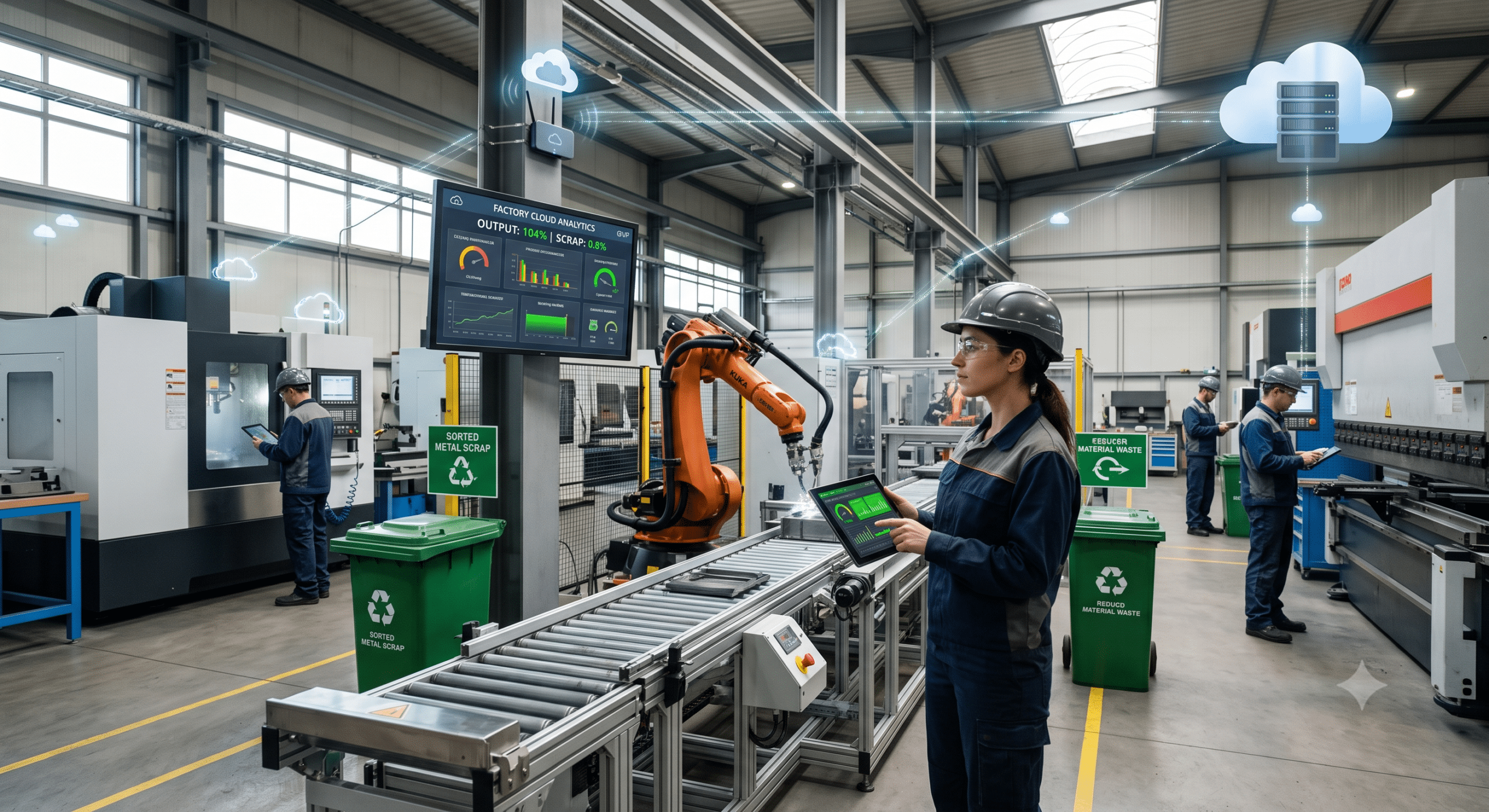
Walk onto any modern factory floor today, and you will quickly realize things look very different. The heavy machinery, the hum of the conveyor belts, and the steady rhythm of the assembly lines remain. However, beneath all that steel and concrete runs an invisible river of digital information driven by modern cloud services.
For a long time, manufacturing companies treated data like an afterthought. For instance, they checked production numbers at the end of a shift. In addition, they logged defects on paper and filed the paperwork away in a cabinet.
Today, that old approach will not cut it anymore. As a result, information has become the most important raw material a business has. If you want to make more products per hour, then you must upgrade your digital backbone. The same applies if you want to get orders out the door faster and stop wasting money on ruined materials.
As technology architects, our main job is to build a reliable digital framework for the factory floor. Therefore, we connect everyday shop equipment to secure, flexible cloud services. Consequently, this bridges the gap between heavy machinery and corporate software.
Ultimately, this guide breaks down exactly how modern cloud services help factories maximize daily output. Furthermore, it shows how to speed up production times and eliminate costly mistakes.
1. Building a Connected Factory Floor
To fix delays in a factory, you must first look at how old computer systems hold teams back. For example, many plants still use isolated computers for different assembly lines.
Because these systems do not talk to each other, managers cannot see issues as they happen. Specifically, if a machine drifts out of alignment, nobody notices until hours later. By then, a whole batch of parts comes out ruined.
+----------------------------------------------------------------------------+
|                         Centralized Cloud System                           |
|         (Tracks Overall Factory Goals and Long-Term Trends)                |
+----------------------------------------------------------------------------+
                                      ^
                                      | Fast, Secure Data Flow
                                      v
+----------------------------------------------------------------------------+
|                        Local Edge Gateway Box                              |
|       (Processes Info Right Next to the Machines on the Floor)             |
+----------------------------------------------------------------------------+
                                      ^
                                      | Direct Machine Connections
                                      v
+----------------------------------------------------------------------------+
|                         Physical Factory Floor                             |
|             (Sensors, Cutting Tools, and Assembly Lines)                   |
+----------------------------------------------------------------------------+
Moving your core operations to modern cloud services fixes this disconnect entirely. In fact, it creates a single, unified network. This network links every piece of hardware on the floor directly to management dashboards.
Meanwhile, by using simple data pipelines, the platform processes thousands of updates every second. For instance, it tracks temperature sensors, vibration monitors, and pressure gauges.
Consequently, this shift completely changes how we maintain tools. We no longer shut down a line for calendar maintenance when nothing is actually broken. Instead, the architecture constantly tracks machine health.
Therefore, if a motor starts vibrating abnormally, the system flags it immediately. After that, maintenance can fix it during a scheduled break. Catching problems early keeps the line running smoothly. In addition, it prevents unexpected breakdowns that stall production.
2. Speeding Up Production Runs
In a busy plant, every single second counts. For example, if an operator has to wait around for a slow computer screen to load, the whole line slows down. Similarly, the same thing happens if they have to search through paper binders for assembly instructions.
Therefore, getting rid of this wasted time requires a data system designed for speed and simplicity.
We solve this problem by combining local on-site computers with the power of public cloud services. First, we place small, rugged computer boxes right next to the production machinery. These boxes handle instant tasks.
Next, these local units process information in milliseconds. This allows them to make immediate adjustments to a machine’s settings. Consequently, they do not have to wait for an internet signal to travel across the country.
[ Machine Sensors ] ---> ( Local Computer Box ) ---> [ Instant Machine Adjust ]
                               |
                               | Sends Daily Updates
                               v
                  [ Main Cloud Storage Hub ]
                               |
                               | Learns Better Settings
                               v
                  [ Updates Sent Back to Machine ]
At the same time, these small boxes bundle up the day’s data. Then, they send it up to a central storage hub. Within these dedicated cloud services, the data is organized in clean, easy-to-read formats.
As a result, this makes it incredibly simple for team leads to look up records. Thus, they can track historical performance and spot bottlenecks easily.
Ultimately, we remove the headaches of hunting down missing information. Because of this, engineers can focus entirely on keeping production moving forward as fast as possible.
3. Catching and Stopping Bad Parts Immediately
Scrap material is a massive drain on profit. When a part is built incorrectly, you waste raw materials and throw away electricity. Furthermore, you lose valuable time that could have been spent making a good product.
To beat this problem, you cannot rely on checking parts after they are completely finished. Instead, you need to catch defects while the product is still being made.
Fortunately, optimized cloud services provide the heavy-duty computing power needed to check quality on the fly. As a machine works, it streams sensor measurements directly into smart monitoring software.
For instance, the software tracks pressure levels and temperatures during a precision welding process. Likewise, it does the same for plastic injection molding.
If a measurement looks slightly off compared to a perfect batch, the system responds instantly. Therefore, it can send an alert to the operator. Furthermore, it can even tell the machine to stop before it repeats the error.
Instead of finding a bin full of bad parts at the end of the day, you catch the very first mistake. Consequently, you fix the issue immediately and save your materials.
4. How Machine Data Travels to the Cloud
Building a system that handles this massive influx of information requires a clear, reliable pathway. Therefore, the network must be strong enough to handle constant activity without losing track of a single message. After all, a missed alert could easily lead to a broken tool.
+----------------------------------------------------------------------------+
|                         Machines on the Plant Floor                        |
|                  (Constantly Reading Sensor Information)                   |
+----------------------------------------------------------------------------+
                                      |
                                      v
+----------------------------------------------------------------------------+
|                          Industrial Gateway Box                            |
+----------------------------------------------------------------------------+
                                      |
                                      v  Safe Internet Link
+----------------------------------------------------------------------------+
|                        Cloud Ingestion Receiver                            |
+----------------------------------------------------------------------------+
                                      |
                                      v
+----------------------------------------------------------------------------+
|                        Fast Data Sorting Software                          |
+----------------------------------------------------------------------------+
              |                                        |
              v  Fast Path (Live Alerts)               v  Slow Path (History)
+----------------------------+          +------------------------------------+
|  Live Shop Dashboards      |          |  Long-Term Storage Lake            |
|  (Shows current status)    |          |  (Used to look up past trends)     |
+----------------------------+          +------------------------------------+
The data journey begins right at the machine. First, a local gateway box collects the raw signals from the equipment. Then, it translates the mixed industrial languages into one standard format. Finally, it sends it securely out over the internet.
Thus, the core cloud services act like a massive digital mailroom. They catch every message safely.
From there, the information splits down two separate paths. The fast path sends live numbers straight to visual dashboards on the factory floor. This lets supervisors watch production metrics update live.
Meanwhile, the slow path sends the information to a long-term digital storage lake. This organized history store is perfect for analyzing long-term trends. Consequently, it helps find ways to optimize future factory runs.
5. Protecting the Factory from Digital Threats
When you connect shop machinery to the internet, security must be your top priority. A security breach on a production line is not just a digital headache. Indeed, it can damage expensive equipment or put worker safety at risk.
Because of this, our network designs follow a strict trust-nobody rule.
First, we start by isolating the core machine controls from the regular corporate network. Second, all data traveling from the shop floor to our enterprise cloud services passes through heavily encrypted virtual private tunnels.
Additionally, every single connected device must verify its identity certificate. Specifically, it must do this before it is allowed to send or receive data.
[ Factory Machine Layer ]
           |
           v  Total Network Separation
[ Secure Local Gateway + ID Check ]
           |
           v  Encrypted Private Connection
[ Cloud Firewalls & Access Controls ]
           |
           v  Approved Access
[ Main Cloud Databases ]
Moreover, we design the system to handle internet dropouts safely. If a storm or a cut line takes the factory offline, the local boxes on the floor keep working independently.
Therefore, they will continue to track data and manage the machines normally. In addition, they save all the information to a local backup drive.
Once the internet connection comes back online, the architecture automatically sends the saved logs up to the cloud. As a result, you do not lose a single line of data.
6. Saving Money on Hardware and Upkeep
Switching to subscription-based cloud services fundamentally changes how a manufacturing company handles technology costs.
In the old days, companies had to spend huge amounts of money upfront. For example, they bought physical computer servers, backup batteries, and cooling systems.
However, these expensive machines often sat idle. They simply waited for busy production periods that only happened a few times a year.
Fortunately, modern computing replaces those big upfront bills with a simple monthly utility model. Therefore, you only pay for the exact digital storage and processing power you actually use.
If production slows down for a holiday, you turn down your digital usage. Consequently, your bill drops immediately. Similarly, the same happens during a planned retooling week.
+----------------------------------------------------------------------------+
|                           Cost Comparison Matrix                           |
+------------------------------------+---------------------------------------+
| Old On-Premises Server Systems     | Modern Cloud Services                 |
+------------------------------------+---------------------------------------+
| Expensive upfront equipment costs  | Predictable monthly operating costs   |
| Paid for capacity you rarely used  | Scales up or down based on production |
| Required constant manual IT upkeep | Provider manages updates and uptime   |
| Hard to upgrade as tech changed   | Instant access to new software tools  |
+------------------------------------+---------------------------------------+
Furthermore, remote setups remove the burden of regular hardware maintenance. The external vendor takes care of security patches and hardware replacements.
Consequently, this frees up your internal engineering and IT teams. Instead of spending their days fixing broken computers, they can work out on the floor. Thus, they can focus entirely on making production lines run better.
7. Using Intelligent Automation for Continuous Success
The ultimate goal of setting up a cloud-connected factory is simple. You want to let intelligent automation manage daily optimization automatically.
Once your data pipelines are steady and organized, you can then let smart algorithms look for ways to fine-tune operations.
These smart programs do not just show you past records. Instead, they look at live variables like ambient humidity, shifting material qualities, and tool wear.
After that, the infrastructure calculates the absolute best speed and temperature settings for the current batch. Then, it sends those instructions right back down to the machine controllers.
[ Live Sensor Stream ] ---> ( Cloud Smart Software ) ---> [ Ideal Machine Settings ]
                                                                   |
                                                                   v
[ Machines Automatically Adjust and Run Better ] <-----------------+
Ultimately, using this kind of automated control leads to constant, hands-free improvements.
As the platform processes more data over time, it gets better at predicting variances. Therefore, it becomes excellent at preventing mistakes entirely.
In conclusion, relying on smart cloud services allows your factory floor to squeeze the absolute most out of every machine. Thus, you hit higher daily outputs, cut down production times, and virtually eliminate wasted scrap material.
Frequently Asked Questions
How can cloud services increase our factory output without buying new production machinery?
They increase output by helping you get the absolute most out of your current equipment. For instance, by tracking live metrics from every machine, the system spots tiny delays and balances the speed of different lines. It also warns you about maintenance needs before a breakdown occurs. Consequently, this keeps your current lines running smoothly for longer periods, boosting total output.
Will moving our data to the cloud introduce slow lag times for our machines?
No, we prevent lag by using a balanced setup. Specifically, we install small computer boxes directly on the plant floor. These boxes handle instant, time-sensitive tasks like quality stops within milliseconds. Meanwhile, the core cloud systems are saved for larger, slower tasks like tracking long-term trends.
How exactly does cloud tracking stop the factory from creating scrap material?
The system tracks sensor data from machines as they work. Therefore, if a drill bit gets too hot or a press applies too much pressure, the system catches it immediately. Then, it flags the operator or pauses the machine right after the first bad part, preventing the same mistake from repeating.
What happens if our plant loses its internet connection?
If your internet goes down, your factory keeps running normally. This is due to local backup capabilities built into the on-site gateway boxes. Therefore, these boxes keep tracking data, running quality checks, and managing tools locally. When the connection returns, all saved information automatically uploads to the cloud.
Can we connect older, legacy machinery to these modern cloud platforms?
Yes, you can easily connect older machinery using simple translator boxes called edge gateways. These devices plug directly into older machine controllers. Then, they gather the raw operational data and convert it into a clean format that can be processed easily.
References for Further Reading
-
For a deep look into how industrial operations combine scale with efficiency, check out the guide on Cloud Manufacturing Software Trends by Appinventiv.
-
To explore real-world deployment setups for edge-to-cloud security, read the systems analysis on Cloud Computing in Manufacturing by Soft Suave.
-
For an in-depth breakdown of how data tracking drives down total operation costs, see the case study on Cloud Solutions for Smart Manufacturing by Opsio.