

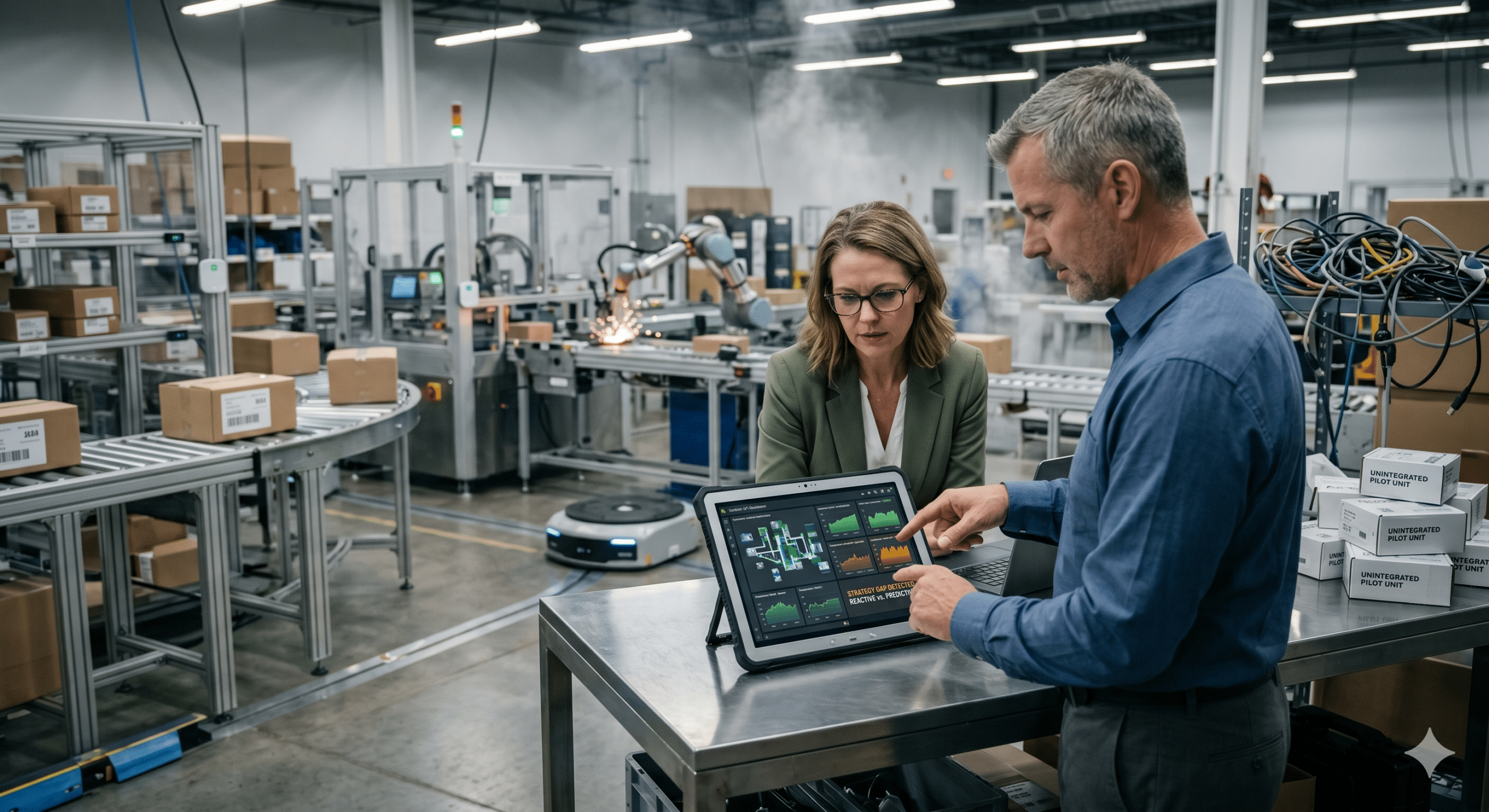
There was a time when the Internet of Things, or IoT, sounded like something reserved for futuristic factories and billion-dollar tech companies. Today, it’s everywhere. From smart warehouses and connected delivery fleets to automated office lighting and predictive maintenance systems, IoT has quietly become one of the most practical business technologies of this decade.
But here’s the interesting part: the companies winning with IoT are not always the biggest companies.
Many small and mid-sized businesses are using connected devices and real-time data to reduce waste, improve customer experience, cut downtime, and make faster business decisions. Meanwhile, some large organizations are still stuck in endless pilot projects that never create real value.
After years of working around business systems, cloud infrastructure, automation, and digital transformation projects, one thing becomes very clear: IoT is not really about devices. It’s about visibility.
Businesses operate better when they can actually see what is happening in real time.
That visibility changes everything.
What Is IoT in Business, Really?
The simplest way to understand IoT is this:
IoT connects physical objects to the internet so they can collect, share, and respond to data automatically.
These “objects” can include:
- Machines
- Vehicles
- Sensors
- Cameras
- Refrigerators
- Wearables
- Air conditioning systems
- Manufacturing equipment
- Smart shelves
- Medical devices
- Delivery trackers
Once connected, these devices become part of a larger digital ecosystem.
Instead of waiting for employees to manually check systems, businesses can monitor operations instantly.
Imagine a restaurant owner receiving an alert that a freezer temperature is rising before food spoils.
Or a logistics company knowing exactly where every truck is, how much fuel it consumes, and whether maintenance is needed before a breakdown happens.
Or a manufacturing company detecting machine vibration patterns that signal a future equipment failure weeks in advance.
That’s the real power of IoT.
It transforms businesses from reactive to proactive.
According to research and enterprise technology reports, IoT adoption continues to grow rapidly as organizations combine connected devices with cloud computing, AI, and automation platforms. (IBM)
Why Smart Businesses Are Investing in IoT
The biggest misconception about IoT is that it’s mainly about innovation.
In reality, most businesses adopt IoT for very practical reasons.
Usually, it comes down to five things:
1. Lower Operating Costs
Operational inefficiency quietly drains profits.
A machine running inefficiently for months can waste electricity, delay production, and increase maintenance costs without anyone noticing immediately.
IoT systems help businesses detect these problems early.
Smart energy systems, for example, can automatically adjust lighting, cooling, and power usage based on occupancy or production demand.
In manufacturing, predictive maintenance systems can reduce expensive equipment downtime.
For fleet businesses, connected vehicle tracking reduces fuel waste and improves route efficiency.
Small improvements across operations often create huge savings over time.
2. Better Decision-Making
Traditional reporting is often delayed.
Managers review weekly reports, monthly spreadsheets, or outdated dashboards and try to make decisions based on information that already changed days ago.
IoT changes that dynamic completely.
Real-time operational data allows businesses to respond immediately instead of waiting.
That responsiveness matters in industries where delays cost money.
For example:
- Retailers can track inventory movement live
- Hotels can optimize energy use room by room
- Warehouses can identify bottlenecks instantly
- Farms can monitor soil conditions automatically
- Hospitals can monitor medical equipment continuously
Real-time data creates real-time businesses.
3. Improved Customer Experience
Customers may never see the IoT system directly, but they feel the results.
Faster deliveries.
More accurate inventory.
Better product availability.
Shorter wait times.
Smarter service experiences.
For example, smart retail shelves can notify staff when products are running low. Connected hospitality systems can personalize room temperatures and lighting preferences for returning guests.
Even customer support improves because connected products can diagnose issues remotely before technicians arrive.
The smoother the experience, the stronger customer trust becomes.
4. Increased Security and Monitoring
Security has become one of the strongest business drivers for IoT adoption.
Modern smart businesses use connected cameras, sensors, biometric access systems, and AI-powered monitoring tools to improve physical security and operational safety.
Construction companies monitor hazardous zones.
Warehouses detect unauthorized access.
Retail stores track unusual activity patterns.
Factories monitor unsafe equipment conditions.
The goal is no longer just recording incidents after they happen.
The goal is preventing them.
5. Competitive Advantage
Businesses that move faster usually win faster.
IoT creates an information advantage.
And in business, information is leverage.
Companies with better operational visibility can:
- Respond to market changes quicker
- Reduce downtime faster
- Improve customer satisfaction
- Optimize staffing
- Forecast demand more accurately
- Scale operations more efficiently
That advantage compounds over time.
The Industries Being Changed the Most by IoT
Almost every industry is being affected by IoT in some way, but a few sectors are seeing especially rapid transformation.
Manufacturing
Manufacturing is one of the biggest IoT success stories.
Smart factories now use sensors, robotics, automation systems, and predictive analytics to improve production efficiency.
Machines can now “communicate” maintenance needs before breaking down.
Production lines adjust automatically based on demand.
Inventory systems update in real time.
Industrial IoT, often called IIoT, is becoming central to modern manufacturing operations and business models. Recent industry research highlights how companies are using IIoT not only for efficiency, but also for entirely new service-driven revenue models. (ScienceDirect)
Logistics and Transportation
Modern logistics would look very different without connected technology.
Delivery companies now track:
- Fuel usage
- Driver behavior
- Cargo temperature
- Vehicle health
- Traffic conditions
- Route optimization
Fleet management systems reduce delays and improve efficiency dramatically.
For cold-chain logistics like food or medicine transport, IoT monitoring can prevent massive losses from temperature issues.
Healthcare
Healthcare IoT has expanded quickly over the past few years.
Hospitals now use connected devices for:
- Patient monitoring
- Asset tracking
- Smart medical equipment
- Remote healthcare
- Wearable health technology
Remote monitoring became especially important after the global shift toward digital healthcare services.
Connected healthcare systems improve both patient care and operational efficiency.
Retail
Retail businesses are becoming smarter and more data-driven.
IoT helps retailers monitor:
- Customer traffic patterns
- Shelf inventory
- Product demand
- In-store behavior
- Energy consumption
Smart checkout systems and automated inventory tracking reduce labor costs while improving customer convenience.
Some retailers even use heat mapping and connected analytics to redesign store layouts based on customer movement patterns.
Agriculture
Agriculture has quietly become one of the most innovative IoT sectors.
Smart farms now use connected systems for:
- Soil monitoring
- Weather analysis
- Irrigation automation
- Livestock tracking
- Crop management
Farmers can now make better decisions using real-time environmental data instead of guesswork.
In many cases, IoT improves both productivity and sustainability.
The Real Challenges Businesses Face With IoT
Despite all the excitement, IoT implementation is not always easy.
This is where many companies struggle.
Security Risks
The more devices connected to a network, the larger the security surface becomes.
Every connected device creates a possible entry point for cyber threats.
Weak security configurations, outdated firmware, and poor network segmentation can expose businesses to serious risks.
This is why cybersecurity must be part of every IoT strategy from day one.
Not later.
Not after deployment.
Immediately.
Businesses investing in IoT without investing in cybersecurity are creating future problems for themselves.
Data Overload
IoT devices generate enormous amounts of data.
But raw data alone is useless.
Many companies collect information they never actually use.
The real value comes from turning data into actionable insights.
That requires proper analytics platforms, dashboards, AI tools, and business processes.
Without a clear strategy, businesses can drown in information instead of benefiting from it.
Integration Problems
Older systems don’t always work well with modern IoT platforms.
Legacy infrastructure can slow down digital transformation projects significantly.
This is especially common in traditional industries where systems were never designed for real-time connectivity.
Successful IoT implementation often requires:
- Cloud modernization
- API integration
- Network upgrades
- Better infrastructure planning
Technology alone is rarely the problem.
Integration is usually the harder challenge.
Employee Resistance
One of the most overlooked issues in digital transformation is people.
Employees sometimes fear automation.
Managers may resist operational transparency.
Teams may struggle adapting to new workflows.
Technology adoption fails when organizations ignore the human side of transformation.
The best IoT projects involve operations teams early and focus on solving real business pain points instead of forcing technology for the sake of innovation.
Research consistently shows that many digital transformation projects fail because organizations focus too heavily on technology while neglecting operational culture and adoption strategies. (Templeton Recruitment)
Why Cloud Computing and IoT Work Together
IoT and cloud computing are deeply connected.
Without cloud infrastructure, managing thousands of connected devices becomes extremely difficult.
Cloud platforms allow businesses to:
- Store massive IoT data streams
- Process information in real time
- Scale systems globally
- Run AI analytics
- Enable remote monitoring
This combination is why cloud providers continue investing heavily in IoT ecosystems.
Edge computing is also becoming increasingly important.
Instead of sending all data to centralized cloud servers, edge computing processes information closer to the device itself.
That reduces latency and improves performance for time-sensitive operations.
For businesses, this means faster systems and better responsiveness.
The Growing Role of AI in IoT
AI is making IoT smarter.
Without AI, IoT mainly collects data.
With AI, IoT predicts outcomes.
That difference is massive.
AI-powered IoT systems can now:
- Predict equipment failures
- Detect unusual patterns
- Optimize energy usage
- Forecast demand
- Improve logistics
- Automate decision-making
This is where smart businesses gain a serious competitive edge.
The combination of AI, automation, cloud computing, and IoT is shaping the next phase of business transformation. Technology trend reports continue identifying connected systems and intelligent automation as major drivers of future enterprise growth. (McKinsey & Company)
What Small Businesses Often Overlook
Many smaller businesses assume IoT is too expensive or too complicated.
That’s no longer true.
Modern IoT solutions are far more accessible today than they were years ago.
Cloud-based subscription platforms, wireless sensors, affordable monitoring systems, and automation tools have lowered the barrier significantly.
A small business can start simple:
- Smart energy monitoring
- Security cameras
- Temperature sensors
- Inventory tracking
- Fleet GPS systems
- Smart POS analytics
The key is starting with a real business problem.
Not technology hype.
Businesses that approach IoT strategically usually see better results than companies trying to deploy flashy systems without clear objectives.
The Future of IoT in Smart Businesses
The next stage of IoT will feel less visible and more integrated into daily operations.
Businesses won’t talk about “IoT projects” anymore.
Connected intelligence will simply become part of how companies operate.
Several trends are already shaping this future:
Hyperautomation
Systems will increasingly automate themselves with minimal human intervention.
Connected devices, AI, and business workflows will operate together seamlessly.
Smarter Buildings
Commercial spaces will automatically optimize lighting, energy usage, air quality, and security.
Autonomous Logistics
Connected transportation systems and AI-driven routing will continue reducing delivery inefficiencies.
Industrial Digital Twins
Businesses are beginning to create virtual replicas of factories, warehouses, and infrastructure systems for simulation and optimization.
Sustainable Operations
IoT will play a major role in energy efficiency, emissions monitoring, and environmental sustainability initiatives.
Sustainability is quickly becoming both a business strategy and a customer expectation.
What Smart Businesses Should Do Before Investing in IoT
Before purchasing devices or platforms, businesses should slow down and ask a few important questions.
What operational problem are we solving?
Technology without purpose becomes wasted spending.
Focus on measurable business outcomes.
What data actually matters?
Not all data is useful.
Identify the information that improves decisions.
Can our infrastructure support it?
Network reliability, cloud readiness, and cybersecurity matter more than flashy devices.
Who will manage the system?
IoT requires ongoing monitoring, maintenance, and governance.
Are we solving a real customer pain point?
The best technology investments improve customer experience, operational efficiency, or both.
Final Thoughts
IoT is no longer experimental technology.
It’s becoming core business infrastructure.
The companies benefiting the most are not necessarily the ones with the biggest budgets. They are the ones using connected technology to solve practical business problems intelligently.
Smart businesses today understand something important:
Data is valuable, but actionable visibility is priceless.
When businesses can see operations clearly in real time, they make better decisions, respond faster, serve customers better, and scale more effectively.
That’s the real future of IoT.
Not just connected devices.
Connected business intelligence.
Further Reading and Research
Here are several high-authority resources and enterprise research references worth exploring for deeper insights into IoT, automation, and digital transformation:
- IBM IoT Insights
- McKinsey Technology Trends Outlook
- Forbes Technology Council
- Harvard Business Review Technology Section
(IBM)